
 |
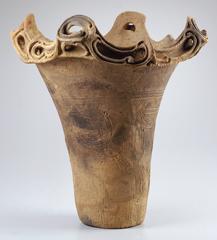
 The
storage jar is remarkably regular and SYMMETRICAL,
a form typically accomplished with the aid of a potter's wheel. But it
was made well before the introduction of the wheel in Japan. The artist
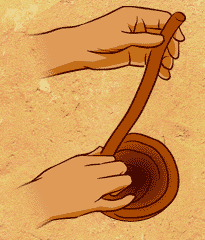
built up the vessel from a base using long coils of clay rolled by hand,
pressed together, and formed into a distinctive shape. Imaginative handles
and rims were also shaped by hand and applied at the top.
The
storage jar is remarkably regular and SYMMETRICAL,
a form typically accomplished with the aid of a potter's wheel. But it
was made well before the introduction of the wheel in Japan. The artist
built up the vessel from a base using long coils of clay rolled by hand,
pressed together, and formed into a distinctive shape. Imaginative handles
and rims were also shaped by hand and applied at the top.
Jomon potters used a coarse-textured clay that was available near their dwelling sites. Sand or crushed stone was added as a TEMPER to give the pots greater structural strength as the pots were being formed.
To make them more durable, unglazed Jomon wares were stacked in simple
open pits and "cooked" by wood fires built around and over them.
The fire was fed continuously for about an hour and then allowed to die
down. The low firing temperatures ranged from 600° to
800° C. Black spots on this jar may have been caused by REDUCTION,
a reduced amount of oxygen during the firing process, or by cooking fires.

Key ideas.
Where does it come from?
What does it look like?
How was it used?
How was it made?
How big is it?
Who Knows?
Additional resources.