

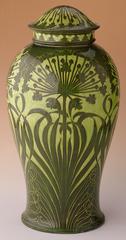
 The
Gustavsberg Porcelain Factory near Stockholm, Sweden was founded in 1827.
By 1900 the factory employed 900 workers and produced a wide variety of
porcelain, stoneware, and tin-glazed earthenware. Josef Ekberg created
many designs for the Gustavsberg factory from 1897 until his death in
1945. His initials are lightly carved near the edge of the base. Made
in 1899, this jar is one of Ekberg's early works for the factory.
The
Gustavsberg Porcelain Factory near Stockholm, Sweden was founded in 1827.
By 1900 the factory employed 900 workers and produced a wide variety of
porcelain, stoneware, and tin-glazed earthenware. Josef Ekberg created
many designs for the Gustavsberg factory from 1897 until his death in
1945. His initials are lightly carved near the edge of the base. Made
in 1899, this jar is one of Ekberg's early works for the factory.
In the late 1800s, with the arrival of the Industrial Revolution, the Swedish economy grew rapidly. A new upper class of wealthy industrial leaders, bankers, and merchants increased the demand for factory-made goods and services. In the wealthier parts of the city people lived in stylish apartments richly decorated with products of the new arts and crafts industries. But problems of housing shortages, high rents, and unsuitable housing conditions were also common in the city as hundreds of people moved into Stockholm from farming areas to find jobs.

Key ideas.
Where does it come from?
What does it look like?
How was it used?
How was it made?
How big is it?
Who Knows?
Additional resources.